After forming over low-latitude oceans, typhoons generally move westward or northwestward.
But this raises one question.
In the trade-wind belt, the prevailing wind is a northeasterly wind, so why do typhoons also move northward against the trade winds?
The concept that appears when explaining this question is the beta effect.
The beta effect is actually not easy to understand.
Let’s first state only the conclusion about why typhoons move northward.
Differences in the effect caused by Earth’s rotation with latitude (the Coriolis force) cause typhoons to move northward.1. Typhoons basically move with the surrounding winds
Typhoons generally move along the large-scale surrounding winds, that is, the steering flow.
At low latitudes, the influence of the trade winds, or easterlies, is large.
However, if we look at actual typhoon tracks, they do not simply move in the direction of the wind; they also move northward.
Westward movement + northward movement = northwestward movementThe westward movement can be explained to some extent by the trade winds, but the northward movement is not easy to understand.
One reason for this is the beta effect.
2. What is the beta effect?
To understand the beta effect, we first need to know about planetary vorticity.
Please refer to the previous post for information about vorticity.
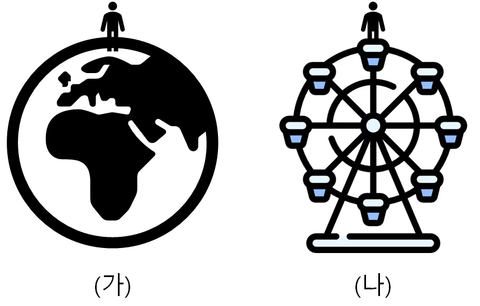
To put planetary vorticity simply again, it is the rotational effect that occurs because Earth rotates.
Earth is rotating, and because of that influence, moving air or seawater appears to bend to the right in the Northern Hemisphere.
This is usually called the Coriolis force.
However, the strength of the Coriolis force varies with latitude.
Location | Coriolis force, planetary vorticity |
|---|---|
Near the equator | Weak |
Mid-latitudes | Stronger |
High latitudes | Stronger |
In other words, in the Northern Hemisphere, the effect of Earth’s rotation becomes larger as you go north.
This change in planetary vorticity, that is, the effect of Earth’s rotation, with latitude is called the beta effect.
3. A typhoon is a huge vortex
A typhoon is a mass of air undergoing large-scale rotational motion.
Typhoons in the Northern Hemisphere rotate counterclockwise.
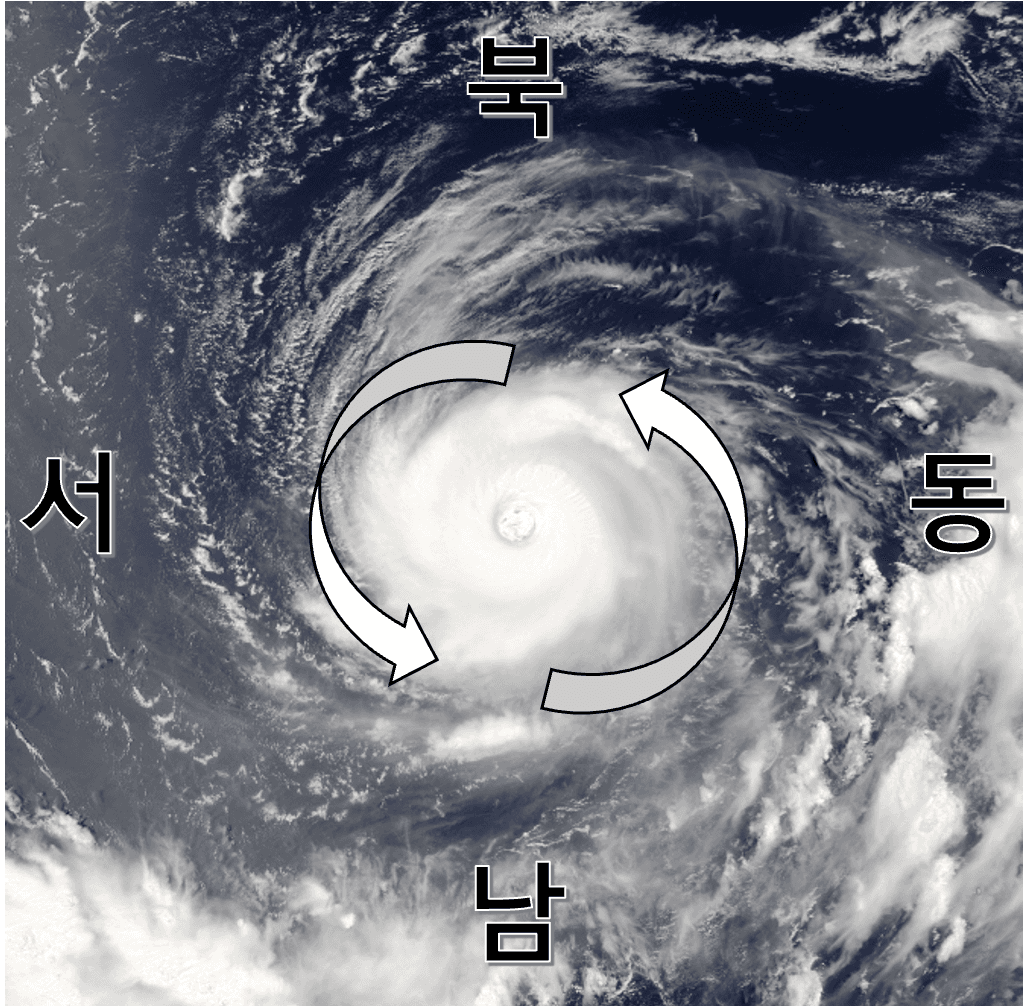
If we simplify this figure a little, it looks like this.
East side of the typhoon: air moves northward
West side of the typhoon: air moves southward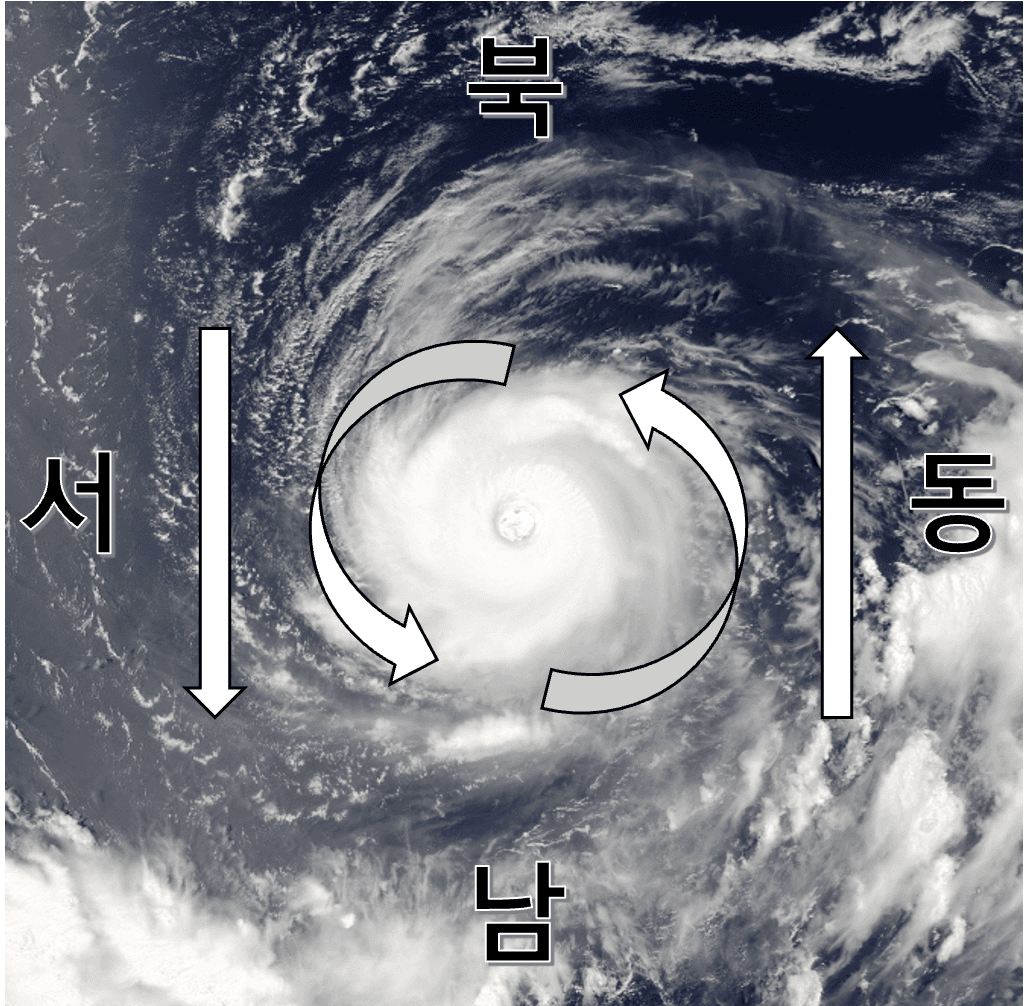
This is where the beta effect comes into play.
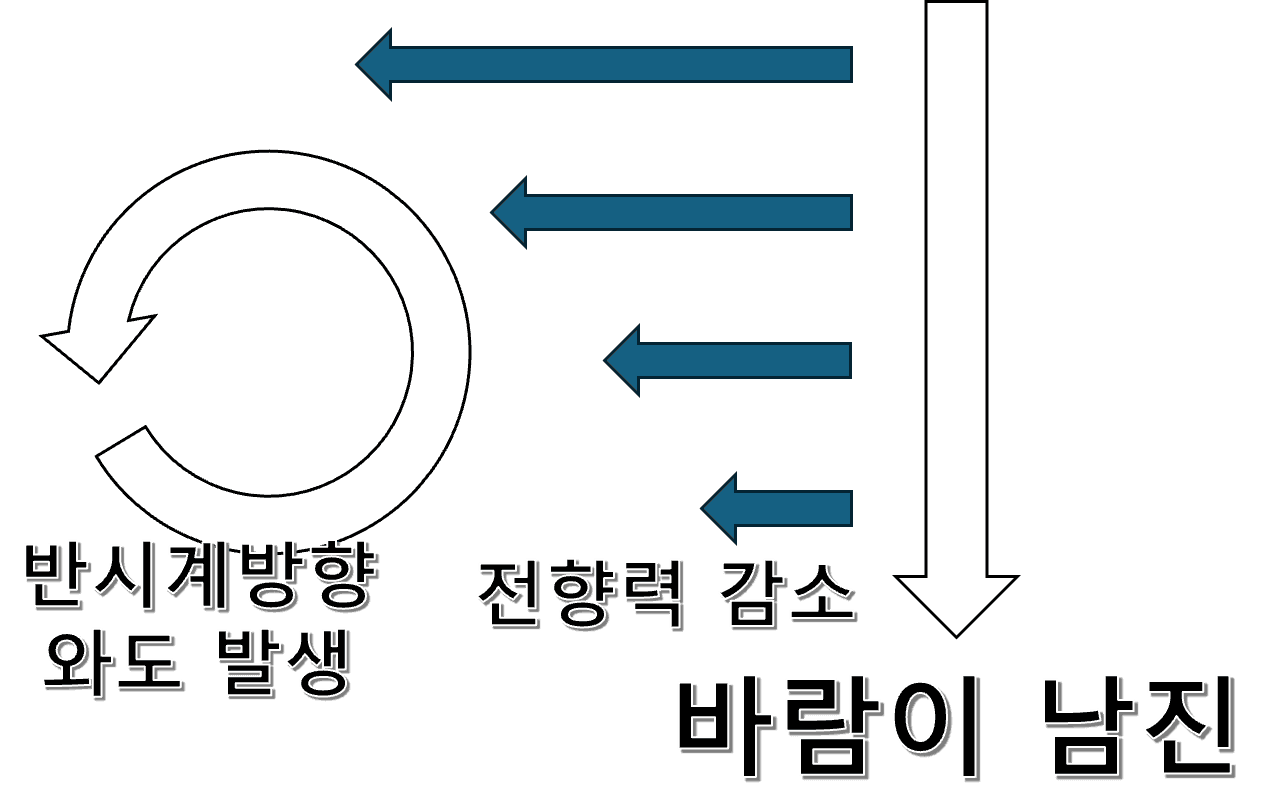
4. On the west side of a typhoon, planetary vorticity decreases
On the west side of a typhoon, air moves southward.
At this time, the strength of the Coriolis force becomes weaker as the air moves south.
Therefore, on the west side of the typhoon, counterclockwise vorticity is generated.
However, the explanation above is somewhat insufficient from a scientific standpoint.
More accurately, it should be explained in terms of vorticity.
First, absolute vorticity is the sum of relative vorticity and planetary vorticity, and absolute vorticity is conserved.
Absolute vorticity = relative vorticity + planetary vorticity

- Planetary vorticity: vorticity caused by Earth’s rotation
- Relative vorticity: the rotational vorticity of the air itself
- Absolute vorticity: the total vorticity combining the two
Here, in the Northern Hemisphere, planetary vorticity increases as you go north and decreases as you go south.
When the air on the west side of the typhoon moves southward, planetary vorticity decreases, so relative vorticity increases.
Therefore, counterclockwise rotation is strengthened.
Planetary vorticity decreases
→ Relative vorticity increases
→ Counterclockwise (cyclonic) rotation strengthens
In other words, on the west side of the typhoon, an effect occurs in which counterclockwise rotation becomes stronger.
5. The opposite phenomenon occurs on the east side of a typhoon
This time, the opposite phenomenon occurs on the east side of the typhoon.
Because the air on the east side of the typhoon generally moves northward, the Coriolis force gradually increases.
Therefore, clockwise rotation occurs on the east side of the typhoon.
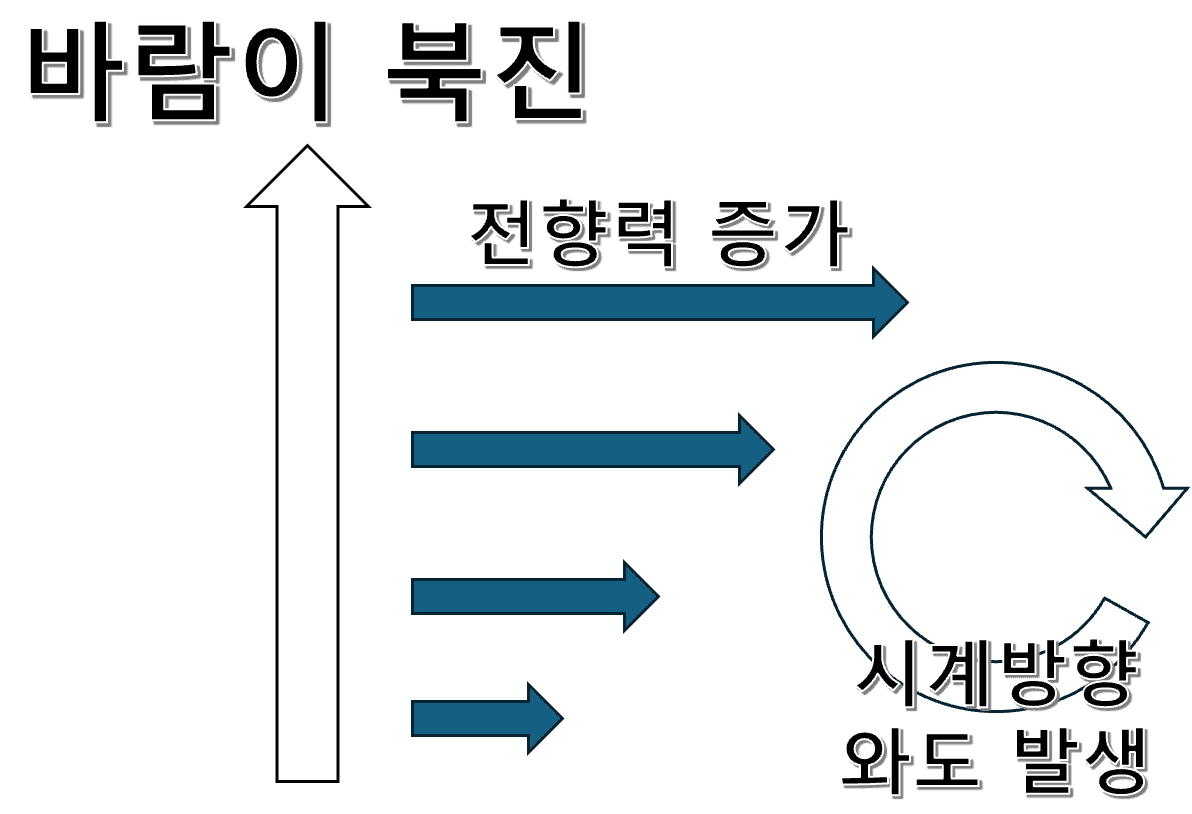
Let’s explain this again in terms of vorticity.
When air moves northward, planetary vorticity increases, and to conserve absolute vorticity, relative vorticity must decrease.
A decrease in relative vorticity can be understood, in the Northern Hemisphere, as counterclockwise rotation weakening or an anticyclonic rotational component forming.
Planetary vorticity increases
→ Relative vorticity decreases
→ Clockwise (anticyclonic) rotation strengthens
To summarize, it is as follows.
Location | Air movement | Change in planetary vorticity | Change in relative vorticity |
|---|---|---|---|
West side of the typhoon | Moves southward | Decreases | Increases |
East side of the typhoon | Moves northward | Increases | Decreases |
Because of this difference, the rotation around the typhoon is no longer perfectly symmetrical from left to right.
6. This asymmetry moves the typhoon northwestward
When changes in planetary vorticity and relative vorticity appear differently around a typhoon, an asymmetric circulation is created around the typhoon.
This is called a beta gyre.
The term is difficult, but the result is as follows.
Because of the beta effect, the wind structure around the typhoon becomes asymmetric, and that asymmetric flow creates a component that moves the typhoon center northwestward.
In other words, the trade winds mainly push the typhoon westward, while the beta effect contributes to making the typhoon shift northwestward.
- Trade winds: westward movement component
- Beta effect: northward or northwestward movement component
- Result: tendency to move northwestward
That is why the beta effect appears when explaining why typhoons at low latitudes generally move northwestward.
7. The easiest explanation at the high school level
For high school students, it is better to explain it in the following order rather than starting with vorticity formulas.
First, the Coriolis force varies with latitude
In the Northern Hemisphere, the Coriolis force becomes stronger as you go north.
Second, a typhoon is a large vortex
The air on the west side of a typhoon moves southward, and the air on the east side moves northward.
Third, the effect of Earth’s rotation therefore differs on the two sides of the typhoon
The air on the west side moves southward and planetary vorticity decreases,
while the air on the east side moves northward and planetary vorticity increases.
Fourth, this difference makes the rotation around the typhoon asymmetric
As a result, the typhoon as a whole does not move only westward, but shifts and moves northwestward.
For students, it can be summarized in one sentence as follows.
The beta effect is the effect in which the strength of the Coriolis force varies with latitude, and because of this difference, the large vortex called a typhoon gradually moves northwestward.
Put even more simply, it can also be expressed this way.
Because the northern and southern parts of a typhoon experience the effect of Earth’s rotation differently, a flow forms that pushes the entire typhoon northwestward.
8. However, typhoon movement should not be explained by the beta effect alone
One thing to keep in mind is that the actual track of a typhoon is not determined by the beta effect alone.
Several factors act together in typhoon movement.
Factor | Role |
|---|---|
Trade winds, easterlies | Move typhoons westward at low latitudes |
North Pacific High | Greatly influences typhoon tracks |
Westerlies | Cause typhoons to curve northeastward in the mid-latitudes |
Beta effect | Creates a component by which the typhoon itself tends to move northwestward |
Therefore, more accurately, it is as follows.
- Typhoons mainly move along the large-scale surrounding winds called the steering flow.
- At low latitudes, they tend to move westward because of the trade winds, and the beta effect creates a component that shifts them northwestward.
In other words, the beta effect is not the whole story of typhoon movement, but it is one important principle that explains the tendency of typhoons to move northwestward.
9. Final summary
The reasons typhoons move northwestward in the trade-wind belt can be summarized as follows.
At low latitudes, typhoons generally move westward because of the trade winds.
However, a typhoon is a huge counterclockwise vortex.
The air on the west side of the typhoon moves southward, and planetary vorticity decreases.
Because absolute vorticity must be conserved, relative vorticity increases.
Conversely, the air on the east side of the typhoon moves northward, planetary vorticity increases, and relative vorticity decreases.
This difference creates an asymmetric flow around the typhoon, that is, beta gyres.
As a result, the typhoon tends to move not simply westward, but northwestward.
Finally, the core of the beta effect can be summarized as follows.
The effect of Earth’s rotation varies with latitude.
A large vortex like a typhoon is big enough for that difference to have an influence.
Therefore, the rotation around the typhoon becomes asymmetric, and the typhoon gains a component of northwestward movement.
Loading comments...